Zebra Midge
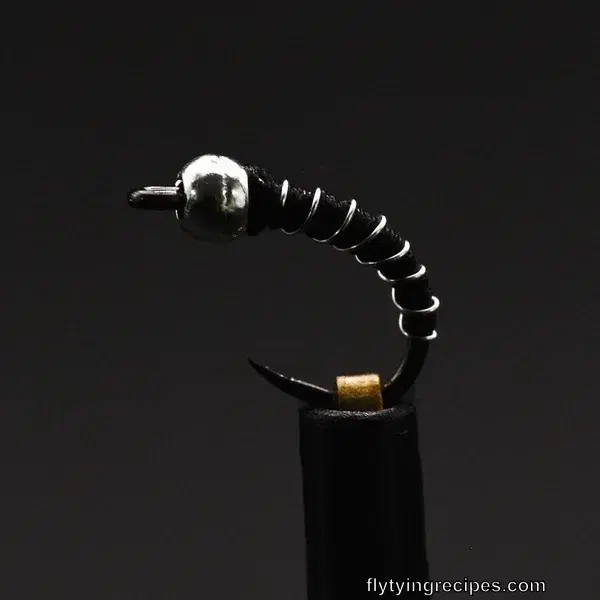
Description
The Zebra Midge is a slim midge larva or pupa pattern for clear trout water, tailwaters, spring creeks, and winter fishing. The thread body, wire rib, and bead keep the profile sparse while adding segmentation and enough weight for small-fly nymphing. Tie it small, usually sizes 16-24, when trout are feeding on midges near the bottom or in the drift.
Recommended sizes: 16-22
Materials
Tying Instructions
- 1.
Start the Thread: Attach the black tying thread just behind the bead, make a few tight wraps, and trim the tag end.
- 2.
Prepare the Wire: Cut 5–6 inches of silver ultra wire and place one end along the shank, starting just behind the bead.
- 3.
Begin the Thread Base: Wrap the thread rearward about one-third of the hook shank, then reverse direction and wrap back toward the bead.
- 4.
Build the Taper: Wrap rearward another one-third of the shank, reverse direction again, and wrap forward toward the bead to create a smooth taper.
- 5.
Wrap to the Bend: Continue wrapping until the thread reaches deep into the bend, then wrap the thread all the way back up to the bead.
- 6.
Flatten the Thread: Spin the bobbin counterclockwise to unwind and flatten the thread for smoother wraps.
- 7.
Smooth the Body: With the thread flattened, wrap rearward again to smooth the body, spinning the bobbin counterclockwise as needed to keep the thread flat.
- 8.
Retwist the Thread: When you reach the bead, spin the bobbin clockwise to retwist the thread back to a round shape.
- 9.
Rib the Fly: Counter-wrap the silver wire forward in evenly spaced open spirals up the shank to the bead.
- 10.
Secure and Break the Wire: Secure the wire with tight thread wraps in front of and behind it, then helicopter the wire to break it off cleanly.